
Vapor barrier, sealed vents, insulated walls
Crawl Space Encapsulation & Insulation in Decatur, AL
Keep humid air and damp ground out from under the floor, then insulate so the floors stay comfortable.
- Free on-site estimates
- Written quote naming the material, thickness and R-value for each area
- Crawl space moisture and attic air leaks checked before we price
Why Decatur Crawl Spaces Get Wet
Crawl space encapsulation and insulation in Decatur start from one fact about the climate: summer air here holds a lot of water. When that air drifts through open foundation vents and meets cool ductwork, pipes and floor framing, it condenses. Add bare dirt that breathes moisture, and many crawl spaces stay damp from May to October. That is where musty smells, sagging fiberglass batts, sweating ducts, rusty fasteners and cupped floors come from. Encapsulation closes the space off from outdoor air and from the ground; insulation then keeps the floor comfortable and the energy bill lower.
What encapsulation includes
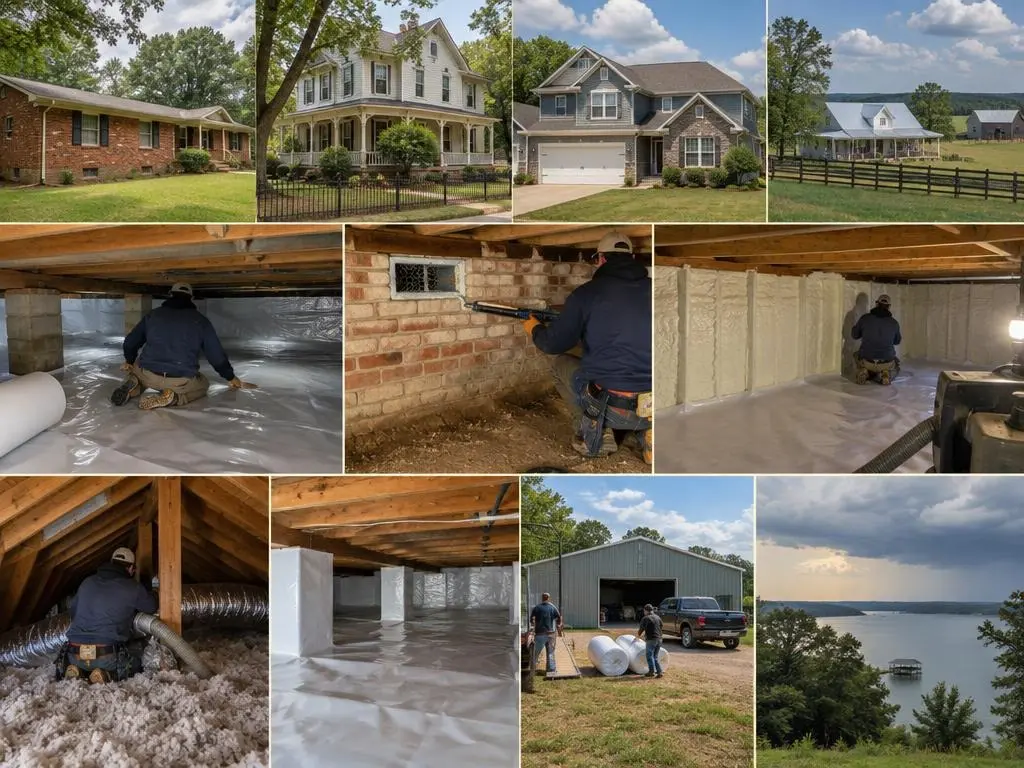
The heart of it is a heavy plastic vapor barrier laid over the ground, run up the foundation walls and sealed at the seams, piers and edges. The foundation vents get closed off and sealed. The crawl space door gets sealed too. Then the space has to be kept dry, either with a dehumidifier or with a small amount of conditioned air from the HVAC system, depending on the house. If water collects after rain, drainage or a sump comes first. Encapsulating over standing water only traps the problem.
Insulating the walls or the floor
Once the crawl space is sealed, the insulation usually moves from the floor to the foundation walls. Closed-cell spray foam on the walls and the rim joist insulates and seals in one layer, and it does not absorb water. The Insulation Institute's summary of Alabama's code lists R-13 or R-5 continuous for crawl space walls in Climate Zone 3. In a vented crawl space that will stay vented, the alternative is insulating the floor above, where the code summary lists R-19, ideally with the framing dry and the ducts sealed first.
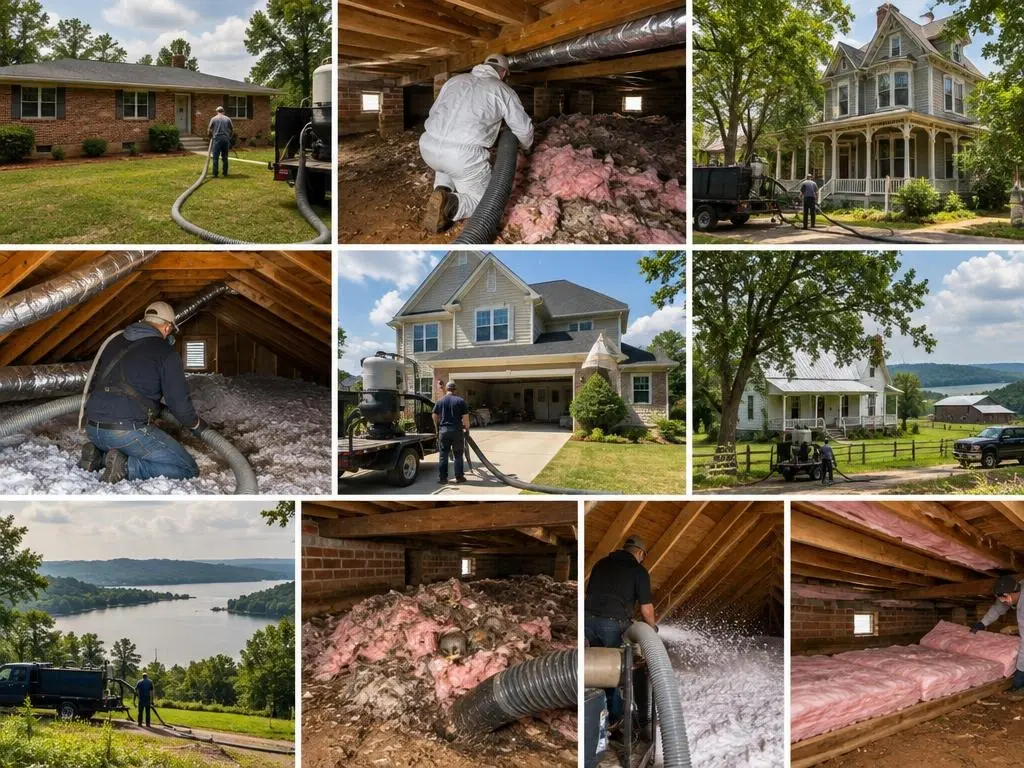
Fallen or wet fiberglass batts are common in older Decatur-area houses with vented crawl spaces. Those usually come out before anything else goes in, since wet batts hold moisture against the wood.
Signs your crawl space needs attention
- A musty smell in the house, especially in summer or after rain
- Fiberglass batts sagging, falling or wet to the touch
- Ductwork or pipes beading with water
- Rust on nails, straps or metal duct parts
- Floors that feel soft, cold or uneven
- Standing water or a wet ground surface after storms
- Evidence of rodents, insects or termite activity
Any of those is worth a look. Some need a plumber, a pest company or a drainage fix before insulation work makes sense, and we will tell you if so.
What the crawl space work costs
HomeGuide's 2026 encapsulation guide lists $3 to $10 per square foot, or $3,000 to $15,000 for a typical job, with a vapor barrier alone at $1,200 to $4,000 and vent sealing at $150 to $450. Closed-cell foam on the walls runs $2 to $5 per square foot in that guide. Size, height, access, how much old material comes out and whether drainage is needed decide where a job lands.
Old houses, new houses
Crawl spaces in Decatur's older neighborhoods can be tight and uneven, with brick piers, old debris and low clearance. Newer homes in the suburbs often have taller, cleaner crawl spaces with long duct runs. Both can be encapsulated; the older ones usually take more prep. We look at access, clearance and how the space drains before quoting.
Tell us what you have noticed under the floor, and we will come out, look and send a written plan. Get a free estimate
What Crawl Space Work Covers
The pieces we combine depending on how wet the space is and how the house is built.
Vapor barrier
Heavy liner over the ground and up the walls, sealed at seams and piers.
Vent and door sealing
Closing off foundation vents and sealing the access door.
Closed-cell wall insulation
Foam on foundation walls and rim joists for Zone 3 wall targets.
Floor insulation
Insulating between floor joists where the crawl space stays vented.
Old insulation removal
Pulling wet, fallen or soiled batts and debris before new work.
Moisture control
Dehumidifier or conditioned-air setup to keep a sealed space dry.
Published Crawl Space Costs
| Job | Range and source |
|---|---|
| Crawl space, spray foam | $2,000 to $4,000 (HomeGuide); $1,000 to $5,900 (Fixr) |
| Crawl space encapsulation | $3 to $10 per sq ft, $3,000 to $15,000 (HomeGuide) |
| Crawl space vapor barrier | $1,200 to $4,000 (HomeGuide) |
| Closed-cell on crawl space walls | $2 to $5 per sq ft (HomeGuide) |
| Crawl space vent sealing | $150 to $450 (HomeGuide) |
| Rim joists, spray foam | $2,000 to $2,500 (HomeGuide) |
Sources: HomeGuide's 2026 spray foam and crawl space encapsulation guides, plus Fixr (2025). Square footage, wall height, access, cleanup and drainage set your total. The written estimate we hand you is what the job costs.
How Crawl Space Work Runs
1. Inspection
We check for water, wet wood, pests, duct leaks and failed insulation.
2. Written plan
Barrier, sealing, insulation and moisture control are priced line by line.
3. Cleanout
Debris and failed insulation come out.
4. Seal and insulate
Liner goes down and up the walls, vents close, foam goes on.
5. Final check
We walk you through the finished space and how to keep it dry.

Why Choose Us for Crawl Space Encapsulation & Insulation
Water before foam
Drainage or leak problems are flagged before anything is sealed.
Line-item pricing
Every part of the job is priced separately so you can choose.
Honest about vented vs sealed
If floor insulation in a vented crawl space fits your house better, we say so.
Crawl Space Encapsulation & Insulation Questions
Is crawl space encapsulation worth it in Alabama?
In a humid climate, a sealed, dry crawl space usually means fewer musty smells, less condensation on ducts and more comfortable floors. Whether it pays depends on how wet the space is now and how the HVAC is set up, so we look before recommending it.
Do I need a dehumidifier after encapsulation?
A sealed crawl space needs some way to stay dry. In many houses that is a dehumidifier; in others it is a small supply of conditioned air. We size the approach to the space.
Can you insulate the floor instead of encapsulating?
Yes, if the crawl space stays reasonably dry. Code calls for R-19 in floors in Zone 3. In a damp vented crawl space, floor insulation tends to get wet and fall, so we usually recommend fixing the moisture first.
What happens to the termite inspection gap?
Ask your pest control company what they need to see. Some prefer a gap at the top of foundation wall insulation for inspection. We leave the details they require.
Crawl Space Encapsulation & Insulation Service Areas
- Spray Foam Insulation in Decatur, AL
- Spray Foam Insulation in Hartselle, AL
- Spray Foam Insulation in Priceville, AL
- Spray Foam Insulation in Trinity, AL
- Spray Foam Insulation in Somerville, AL
- Spray Foam Insulation in Falkville, AL
- Spray Foam Insulation in Athens, AL
- Spray Foam Insulation in Mooresville, AL
- Spray Foam Insulation in Tanner, AL
- Spray Foam Insulation in Madison, AL
- Spray Foam Insulation in Huntsville, AL
- Spray Foam Insulation in Moulton, AL
- Spray Foam Insulation in Courtland, AL
- Spray Foam Insulation in Town Creek, AL
Get a Crawl Space Encapsulation & Insulation Estimate
Describe what you have noticed under the floor. We will look and send a written plan and price.